FootyPro › Balanced football teams
Balanced sidesEvery group has the two who can play and the two who just started. Names in a hat puts both good ones on the same side half the time — and the night is over by half-time.
Free to start. No card.
None of these is the fault of whoever does the draw.
Shuffling names is quick and blind: nothing stops the two best landing on the same side, and it happens often.
If the draw does not handle goalkeepers separately, that is exactly what you get.
It is fun until the same person is always chosen last.
With no number to point at, every swap looks like favouritism — and the organiser takes the blame.
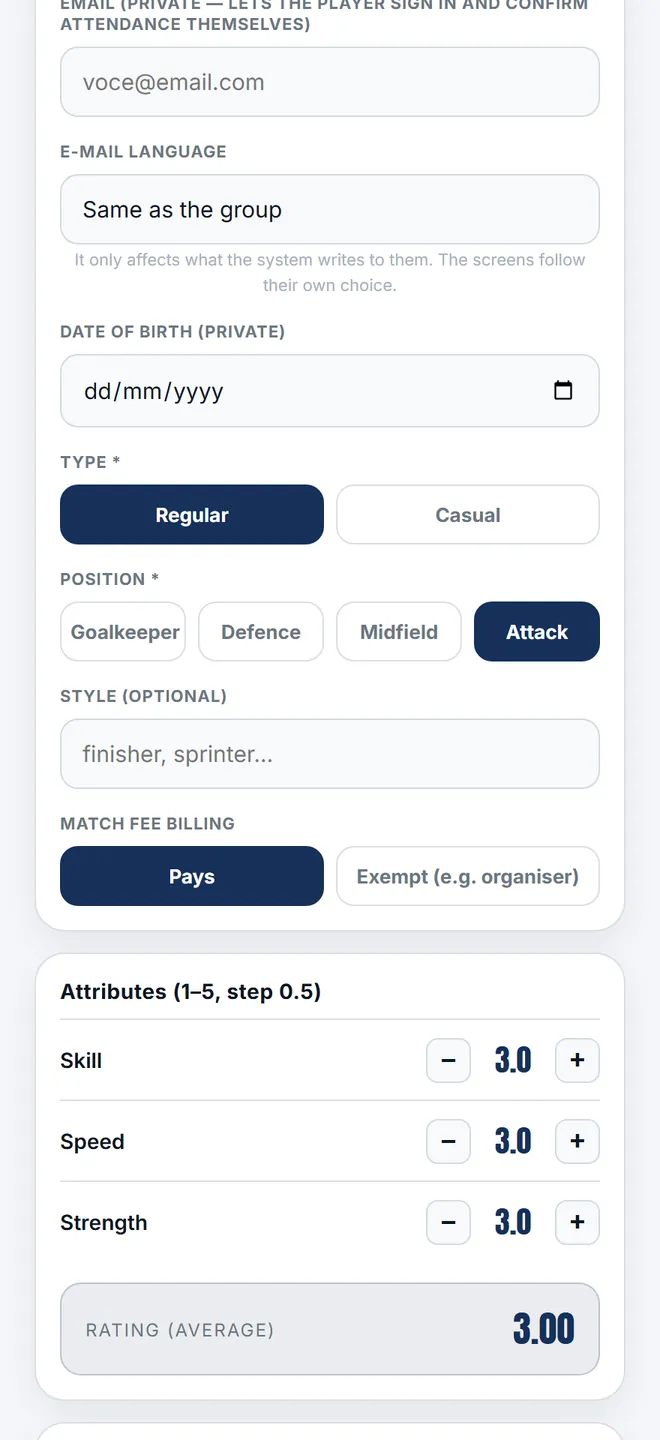
You set each person's attributes in their profile, and the weight the draw uses comes from there. There is no automatic rating and nothing imported: the yardstick is your group's.
Whoever runs the game already knows who can play — the app just makes that explicit and repeatable, instead of leaving it in one person's head.
The draw places the goalkeepers before anything else, honouring how many each side should have. Then it shuffles within each position — defence, midfield and attack — and shares them out.
Only then does it look for SWAPS between players of the same position that bring the sides closer together, stopping when no swap improves things any further. The result is never worse than the first split; it is not a promise of perfect equality, but of an explicit, repeatable effort.
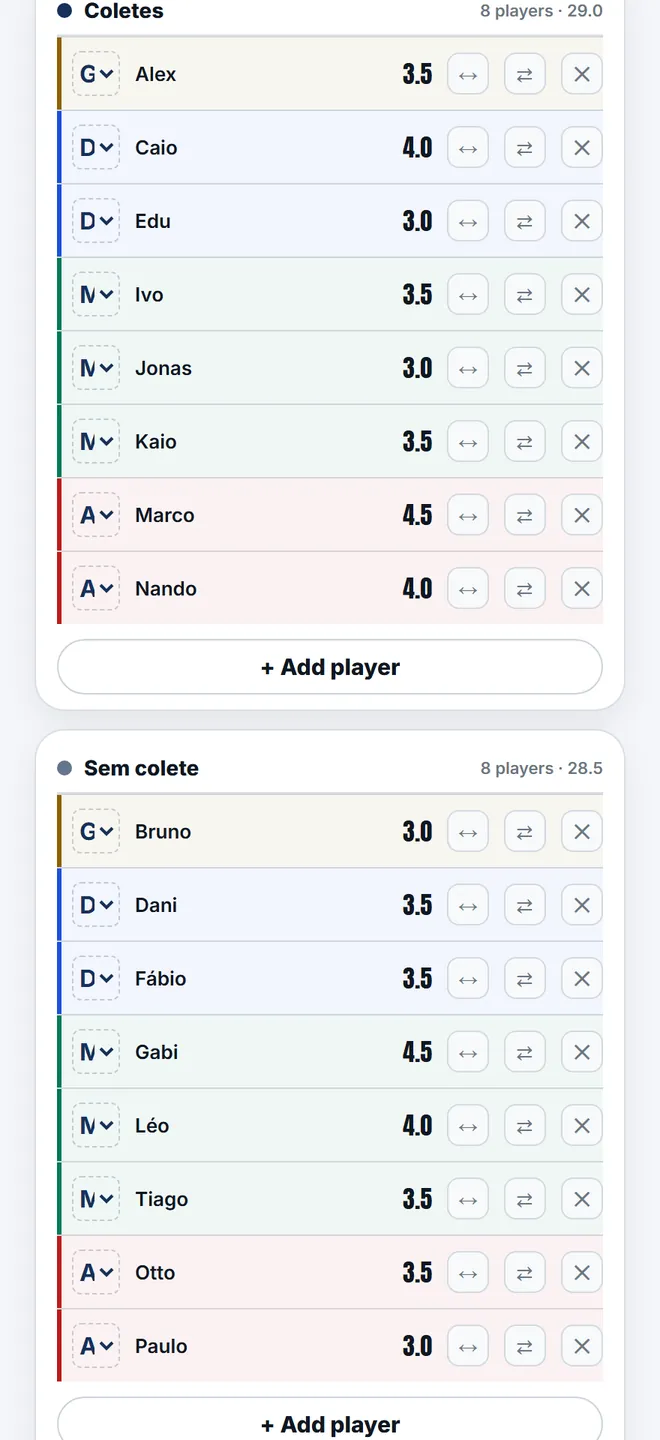
The draw hands you a suggestion. Move anyone you like, drag them across, draw again — and only then save.
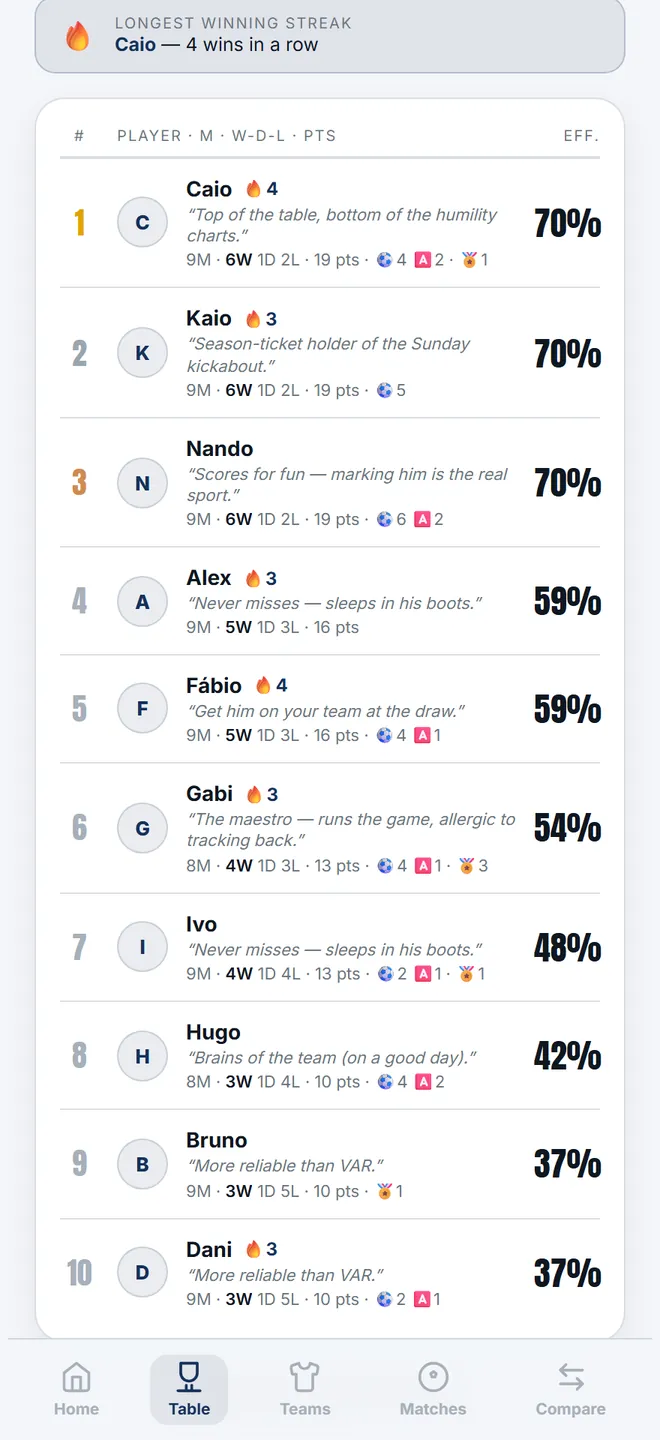
Once saved, that line-up is what the score, the scorers, the player of the round and the league table are built on.
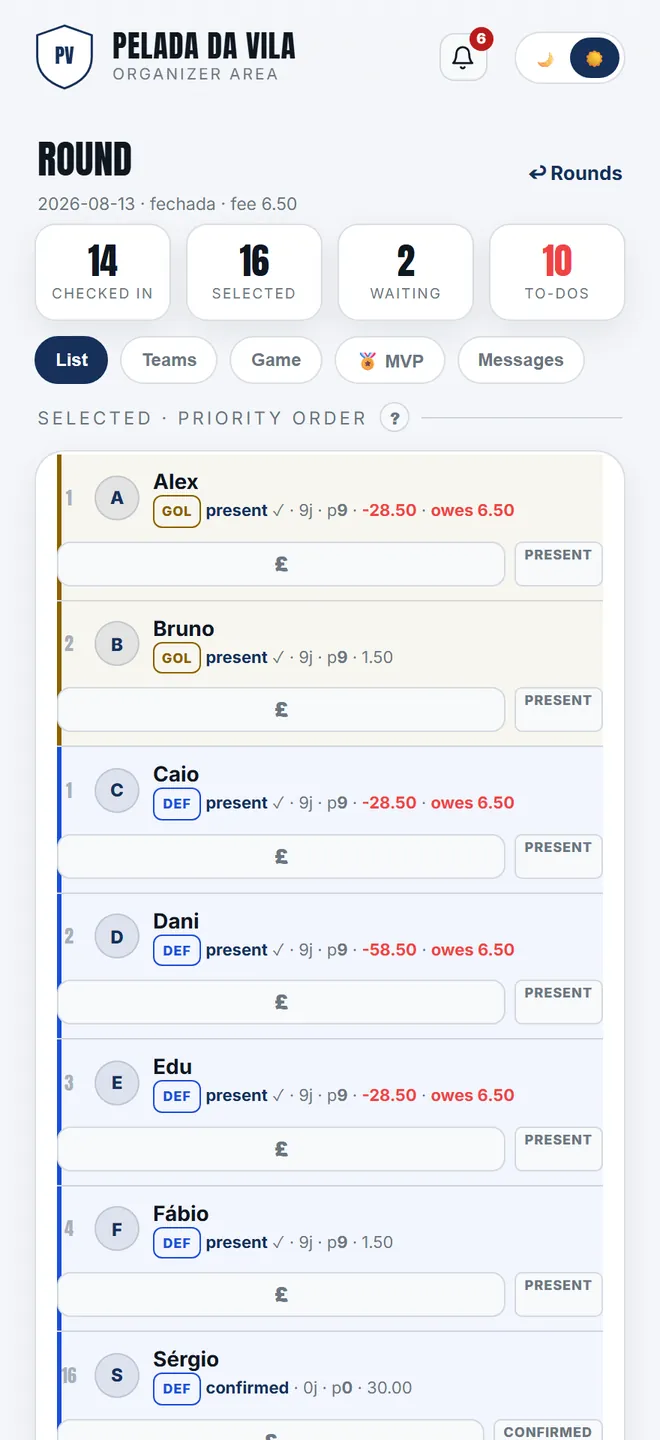
You set how many play per side, how many sides there are and the shape. A three-team rotation is as supported as the classic two.
And if the pitch is smaller one night, you can change the format for that round alone, without touching the group's settings.
Everything below is live today. Nothing here is a roadmap promise.
Attributes you set become the weight that balances the sides. No automatic rating.
Help →Defence, midfield and attack are shared out separately, following the shape you set.
Help →Rotation, winner-stays-on or the classic two. You record the night's matches as they happen.
Help →Smaller pitch or extra players? Change the round's format without touching the group's settings.
Help →Whoever confirmed and checked in is who goes into that night's draw.
The proposal shows the sides next to each other, with the strength gap between them.
Change what you like, save, and paste the sides into the chat with the ready-made message.
The public team generator runs exactly this code — you can try it now, without an account.
The screen shows each side's total, so the conversation is about a number, not an impression.
The draw proposes; the organiser saves. Nothing is imposed by the app.
Every week, for a group in London, with a season and a table.
No, and no draw does. It shares players out by position and then looks for swaps that bring the sides closer, stopping when no swap improves things further. The result is an explicit effort at balance, not mathematical equality.
From you. Attributes are set in the player's profile, by the organiser. There is no automatic rating and nothing imported.
Yes. The draw returns a proposal and nothing is saved until you say so — move people, draw again, or build it by hand.
Goalkeepers are placed first, in the number you configured per side. If there are not enough to go round, the screen says so.
Yes, from 2 to 6. The night's matches are recorded one by one, which works for rotation and for winner-stays-on alike.
No. The public team generator is free and asks for no sign-up — the account is only needed to keep a squad, a table and history.
Set the squad up once and let the draw do the boring part.
Create my group free Footy
Footy